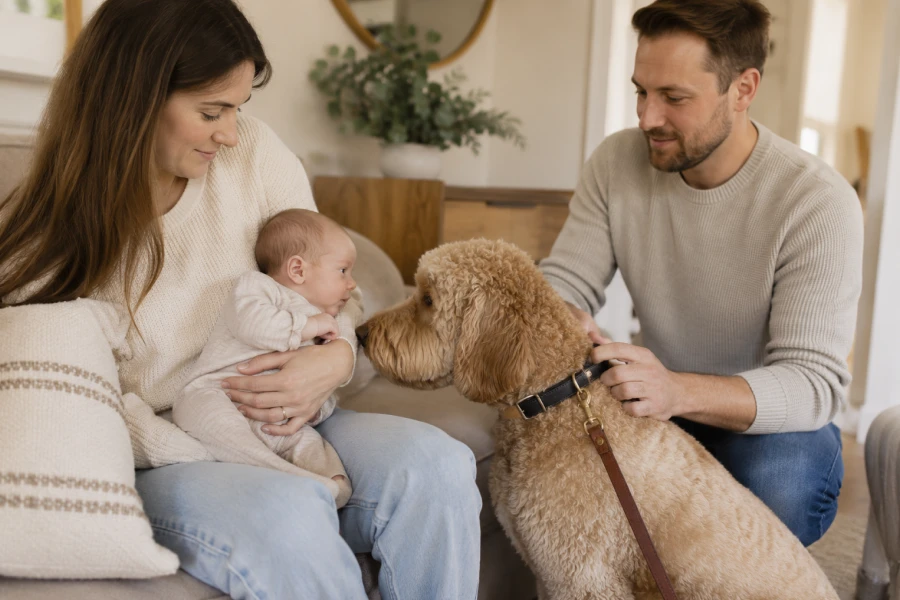
Newborn and pet introduction should begin long before the pet smells the baby. Families often imagine the first sniff as the main event. In reality, the groundwork matters more. Pets need steady routines, clear boundaries, and calm leadership. Babies need protected spaces and careful supervision. Parents need a plan they can follow while tired. A thoughtful approach lowers risk and reduces emotional pressure. The first meeting should feel like one small step. When preparation comes first, the household adjusts with less confusion. Everyone benefits from a slower start.
Practice helps pets understand changes before they become permanent. Move beds, bowls, and gates early. Practice walking beside an empty stroller. Reward settling on a mat. Teach pets to wait outside the nursery. These changes should happen before the baby arrives. Parents can follow a baby arrival pet plan to stay organized. Small practice sessions build new expectations. The pet learns without feeling displaced. Routine practice makes the first days less chaotic.
Scent can support adjustment when handled carefully. Bring home a baby blanket or hat before the first meeting. Let the pet smell it calmly. Keep the item in an adult’s hand. Reward relaxed behavior. Remove the item if excitement rises. Do not allow chewing, grabbing, or guarding. Scent exposure should be brief. It introduces information without creating direct contact. Parents stay in control while the pet begins processing change.
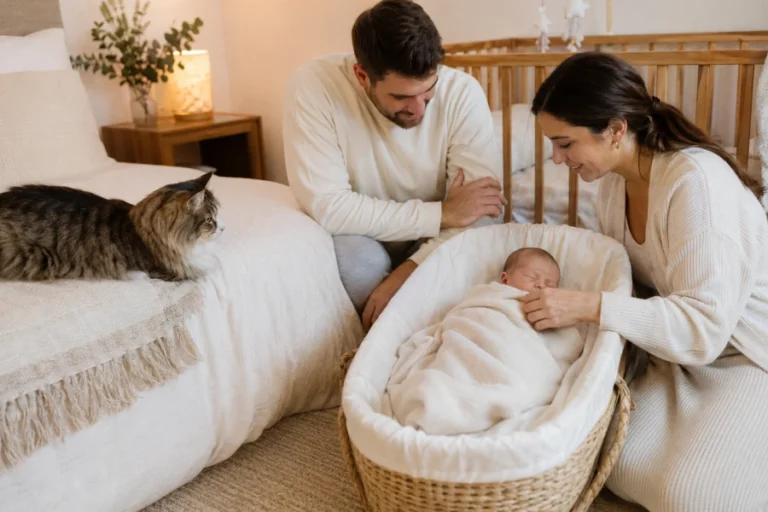
The baby needs spaces that stay pet-free. Cribs, bassinets, changing stations, and play mats require protection. Pets should not sleep in these areas. Gates and closed doors can help. Parents should set these rules early. Sudden restrictions feel more confusing after the baby arrives. A protected space gives adults confidence. It also prevents accidental jumping or climbing. A nursery pet safety setup keeps expectations clear. Good boundaries reduce daily stress.
Short meetings protect everyone from overstimulation. A pet may begin calmly and become excited later. End before that shift happens. Keep the baby held by a seated adult. Let another adult handle the pet. Watch the pet’s whole body. Sniffing should be gentle and brief. Praise calm behavior quietly. Then create distance again. This pattern teaches that calm contact begins and ends safely. Repeated short meetings build trust better than one long session.
Uncertainty does not mean failure. Some pets hide. Others bark, pace, or avoid the baby. Parents should give space instead of forcing closeness. Keep routines stable. Offer calm attention away from the baby. Ask a qualified trainer or veterinarian for support when behavior feels concerning. Avoid punishment for fear-based reactions. It can increase stress. A calm home transition helps pets adjust gradually. Patience protects safety.
Progress should remain gradual after the first week. Keep supervision consistent. Continue rewarding calm behavior near baby sounds and movement. Maintain pet exercise when possible. Protect rest spaces from disruption. Babies change quickly, so routines need updates. Rolling, reaching, and crawling increase risk. Parents should prepare before each new stage. The introduction is not a single event. It is an ongoing family adjustment that deserves steady attention.

Leave a comment