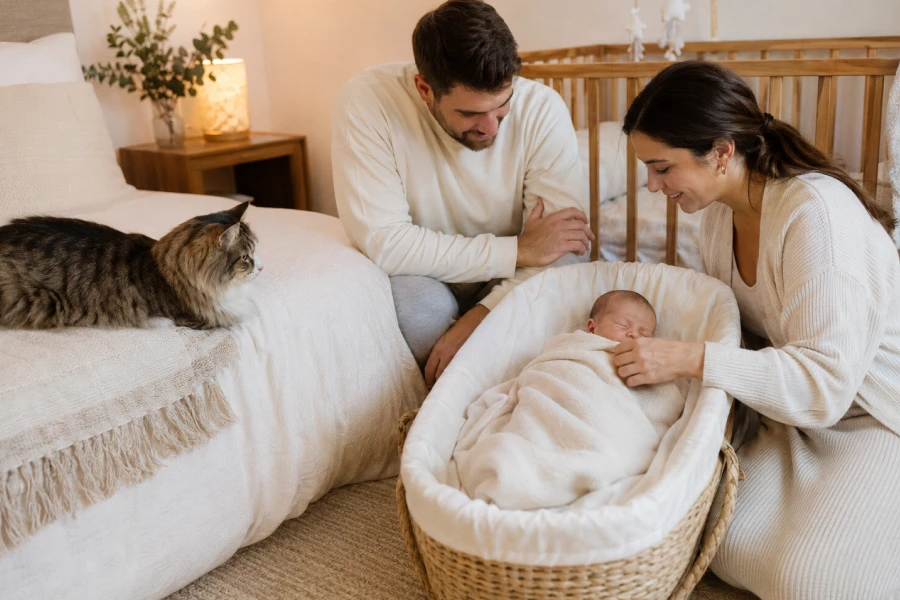
Introduce baby to pets slowly, and the whole home feels more secure. A new baby changes sounds, smells, routines, and attention. Pets notice those changes before families realize how much has shifted. Rushing the first meeting can create stress for everyone. A gentle plan protects the baby while respecting the animal’s adjustment. Parents should prepare before the hospital bag comes out. They should also supervise every early interaction closely. Calm introductions help pets stay curious instead of overwhelmed. The goal is not one perfect moment. It is a safe beginning that supports the entire household.
Preparation gives pets time to adjust before the baby comes home. Change sleeping areas early. Practice new walking schedules. Play baby sounds at low volume. Bring in baby gear before it becomes urgent. Pets need time to investigate without pressure. Parents can use baby pet safety steps to organize the transition. Familiarity lowers excitement later. A pet that has already seen the stroller reacts less dramatically. Early preparation makes the first meeting calmer.
Boundaries should feel normal before the newborn arrives. Keep pets out of sleep spaces. Teach them to settle near, not on, baby items. Use gates when needed. Reward calm behavior around nursery furniture. Parents should avoid sudden restrictions after bringing the baby home. That timing can create confusion. A steady boundary plan feels fairer to the pet. It also protects the baby from accidental contact. Safe distance supports trust on both sides.
Body language tells parents when to pause. A relaxed pet may sniff gently and move away. A stressed pet may pant, freeze, hide, bark, or stare intensely. Cats may flatten ears or flick tails. Dogs may lick lips or turn their heads. These signals deserve attention. Parents should never force closeness. Space is a safety tool. A pet body language plan helps families respond early. Calm exits prevent bigger problems. Respect makes future meetings easier.
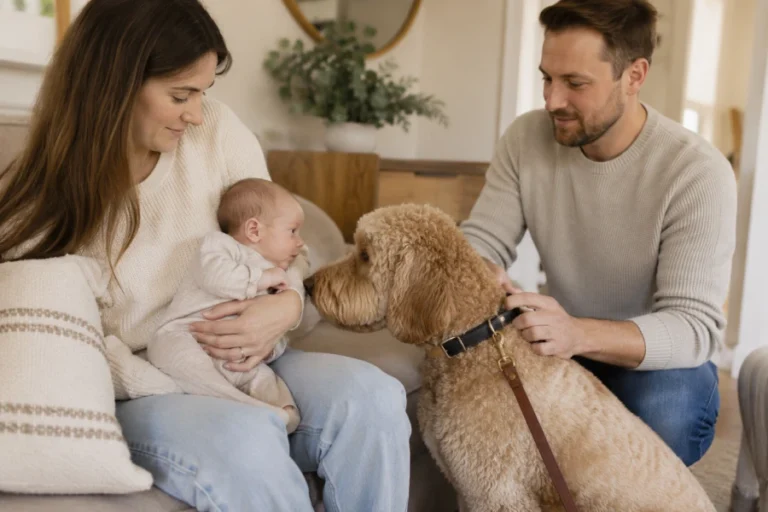
The first day should be quiet and controlled. Let the pet greet one adult first. Keep the baby safely held. Allow brief sniffing only if the pet remains calm. Another adult should manage the pet. End the meeting before excitement builds. Short success matters more than long exposure. Parents should praise calm behavior softly. Avoid loud celebration. A peaceful first day creates confidence for the next interaction.
Safety depends on daily habits, not only introductions. Never leave pets alone with the baby. Keep feeding areas separate. Protect pet rest spaces from toddler access later. Wash hands after handling pet items. Use gates during busy moments. Parents can build newborn pet boundaries into ordinary routines. Predictable separation lowers risk. It also gives the pet a place to decompress. Safe routines make the household easier to manage.
Long-term success grows through repetition. Each calm interaction teaches the pet what the new family rhythm means. Parents should keep rewards small and consistent. Attention for the pet still matters. A walk, brushing session, or quiet cuddle can prevent resentment. Babies become more active quickly. The plan should change as movement increases. Crawling creates new challenges. Review boundaries before that stage begins. A gentle introduction becomes safer when it keeps evolving.

Leave a comment