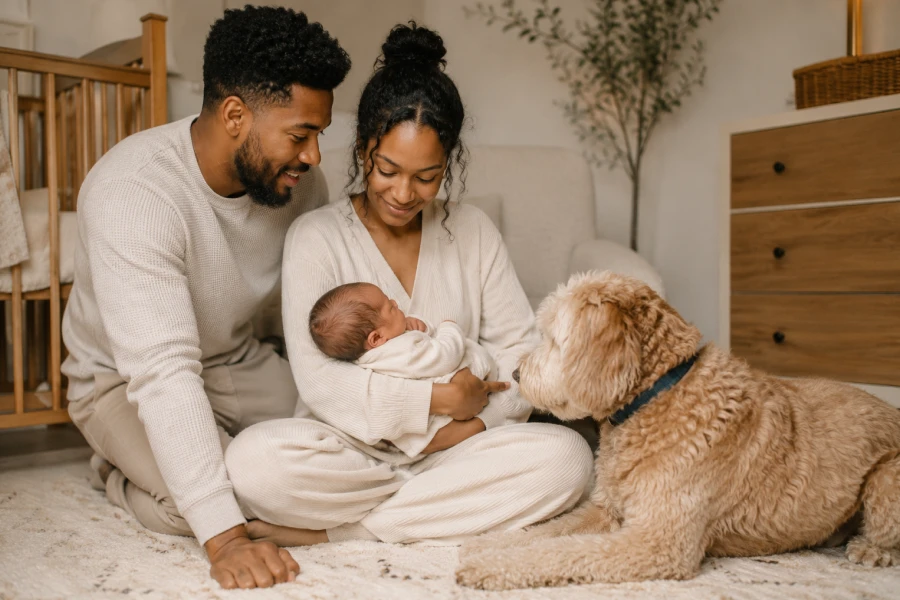
Baby and dog first meeting can feel emotional, but safety should lead the moment. Dogs experience a new baby through scent, sound, movement, and changed attention. Even gentle dogs need structure during this transition. Parents should avoid assuming love will make the meeting safe. A slower start gives the dog time to process. It also gives adults time to observe behavior. Calm introductions create better memories than rushed photos. The baby should stay protected throughout the interaction. The dog should never feel trapped. A steady plan helps everyone begin well.
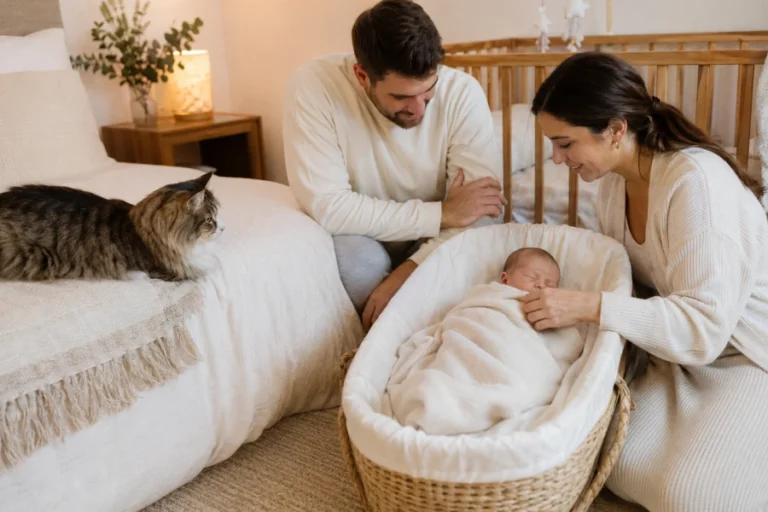
Adult control protects both the dog and the baby. One adult should hold the baby securely. Another should manage the dog. Use a leash if it helps maintain distance. The dog should approach only when calm. Parents should avoid face-to-face contact. Sniffing should happen near the baby’s feet or blanket. Use supervised first meetings to keep the process clear. End quickly if energy rises. Control makes the moment safer.
A dog with unmet needs may struggle to stay calm. Exercise before the meeting can help. Choose gentle activity, not exhausting chaos. A walk, sniff session, or short training game can settle energy. Feeding the dog beforehand may also help. Parents should avoid introducing the baby during peak excitement. The home should feel quiet. Visitors should stay limited. A calm environment supports better choices. Preparation shapes the dog’s response before contact begins.
Parents should watch for subtle warning signs. Stiff posture matters. Hard staring matters. Lip licking, yawning, whining, or backing away can signal stress. A wagging tail does not always mean comfort. Dogs communicate with their whole bodies. Parents should pause when signals feel mixed. Distance is a smart response. A dog and baby prep plan helps adults respond before problems grow. Calm management prevents avoidable risk. Respecting signals builds trust.
A good ending matters as much as a good start. Stop while the dog remains calm. Reward relaxed behavior. Move the baby away gently. Give the dog a familiar task afterward. This might be resting on a mat or chewing an approved item. The dog should not feel punished when the meeting ends. Parents should keep the tone normal. Short sessions can repeat later. The dog learns that calm behavior creates predictable outcomes. That lesson supports future safety.
Dogs notice attention changes quickly. A new baby can absorb the household. Parents should give the dog predictable moments of connection. Short walks, feeding routines, and quiet praise help. Avoid giving attention only when the baby sleeps. The dog should learn that good things still happen near the baby. Keep excitement low. Use gates when adults feel busy. A family pet adjustment routine protects the bond. Balanced attention lowers stress.
The first meeting starts a longer process. Babies become louder, stronger, and more mobile. Dogs need updated boundaries at every stage. Teach children gentle behavior as they grow. Protect the dog’s food, toys, and bed. Continue supervising every interaction. Parents should never rely on past success alone. A calm newborn stage does not guarantee a calm crawling stage. Review the plan often. Safety improves when the family stays proactive.

Leave a comment