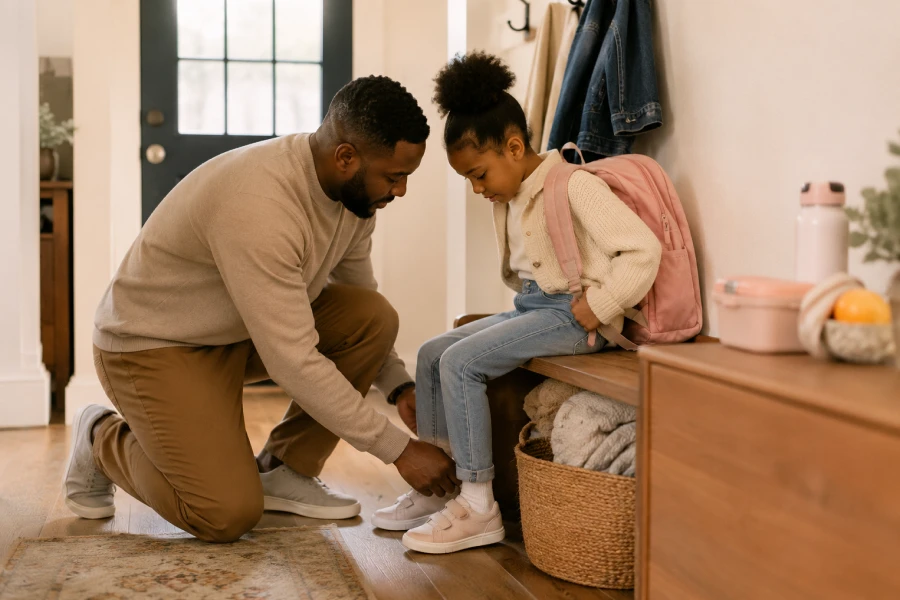
A school morning routine works best when it removes confusion before the day gets loud. Children need connection, direction, and enough time to move at a human pace. Parents need a plan that survives missing shoes, sleepy moods, and last-minute papers. The goal is not military precision. It is a smoother path from wake-up to the door. Families often improve mornings by changing the order of tasks. A better sequence reduces stress before anyone starts arguing. Small adjustments can change the tone of the whole day. When children understand the pattern, leaving home becomes less dramatic.
Morning stress follows children into school. It also follows parents into work. A rushed departure can make everyone feel behind before the day begins. Good design solves predictable problems early. Put the hardest tasks before the child gets distracted. Keep the easiest tasks near the end. Dressing usually belongs before breakfast. Packing belongs before shoes. Families can use parent morning planning to organize these steps. The right order turns scattered activity into forward motion.
Many families underestimate how long children actually need. Adults imagine ideal timing. Children live in real timing. They pause, wander, ask questions, and move slowly after waking. Track one ordinary morning without changing anything. Write down when each step starts and ends. This reveals the true schedule. Then add a small buffer. A realistic plan feels kinder than a rushed one. The family leaves more peacefully because the clock finally matches reality.
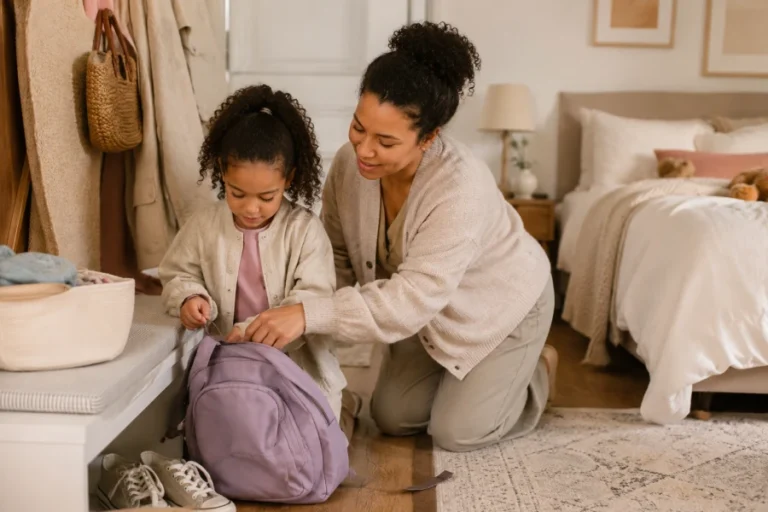
Children often resist abstract time. Five minutes may not mean much to them. Concrete cues work better. A song can signal dressing time. A timer can mark breakfast ending. A basket by the door can signal packing. Parents should use the same cues daily. Repetition builds confidence. The home becomes easier to navigate. A before school routine helps children act without constant prompting. Familiar cues also reduce morning power struggles.
Repeating instructions exhausts parents quickly. It also teaches children to wait for the third reminder. A stronger routine shifts the reminder onto the environment. Charts, baskets, hooks, and timers carry part of the work. Parents can ask one simple question instead of giving a lecture. What comes next? This keeps the child engaged. It also keeps the adult calmer. A visual sequence supports independence without creating distance. The parent becomes a coach rather than a constant announcer.
Children appreciate progress they can see. Rewards do not need to be candy or screens. Extra reading time can motivate one child. Choosing the car song may motivate another. Some children simply enjoy checking off steps. Keep rewards connected to calm completion. Avoid making every task a negotiation. The routine should still stand on its own. A smoother school exit often becomes its own reward. Everyone feels the difference before reaching the car.
Hard days need a smaller version of the plan. Illness, poor sleep, or family stress can slow everything. Create a minimum routine for those mornings. It should include dressing, eating, packing, and leaving. Skip extras without guilt. Parents should announce the simpler plan calmly. Children feel safer when adults adapt without panic. The routine still matters, even when shortened. Consistency does not mean doing everything. It means knowing how to continue when life feels messy.


Leave a comment