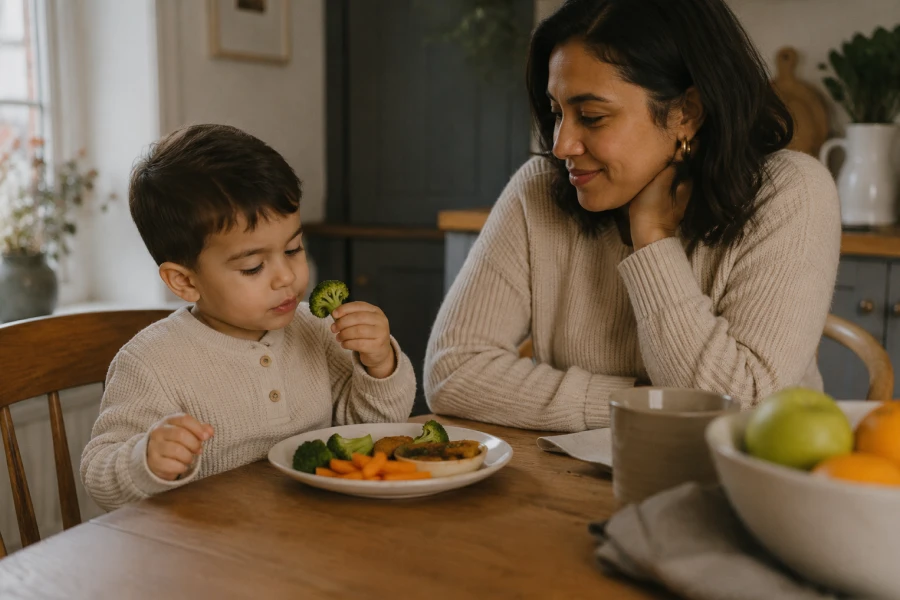
Toddler picky eating help becomes more effective when parents look beyond the food itself. A toddler’s response depends on hunger, sleep, mood, texture, control, and attention. The plate matters, but the environment matters too. A noisy table can overwhelm a sensitive child. A rushed dinner can make refusal more likely. Parents often need a calmer structure before they need new recipes. This approach reduces pressure on everyone. It also makes mealtimes easier to repeat. Toddlers learn through predictable experiences. The table should feel safe before new food feels possible.
Routine gives toddlers a sense of safety. Meals should happen at fairly predictable times. Snacks should support hunger instead of replacing dinner. A tired toddler may reject food they usually accept. Parents can adjust timing before assuming the food is the problem. Use mealtime routine support to create steadier patterns. Keep the table simple. Reduce toys and screens during meals. Sit together when possible. Predictability helps toddlers understand what eating time means.
Power struggles make toddlers protect their choices. They may refuse just to regain control. Parents can offer control in small, safe ways. Let the child choose between two cups. Let them decide where one vegetable sits. Offer a tiny tasting portion without demanding a bite. This keeps adults in charge of structure. It keeps toddlers in charge of their bodies. Calm boundaries reduce drama. Over time, mealtime becomes less about winning. It becomes a place to practice trust.
Many toddlers reject food because texture feels intense. Crunchy, slimy, mixed, or sticky foods can feel surprising. Parents should not dismiss this reaction as stubbornness. Start by noticing the textures the child accepts. Then introduce nearby textures slowly. A child who likes crackers may try toast strips. A child who likes yogurt may accept a thicker dip. Small bridges work better than big leaps. A sensory eating notes system helps parents see these bridges. Respect makes exploration safer.
Toddlers need chances to participate. Participation builds curiosity before tasting begins. Let them rinse fruit. Let them stir a dip. Let them place food on a plate. These small jobs create familiarity. A child may taste later because the food feels less unknown. Parents should keep expectations light. Cooking together is not a guarantee. It is another exposure. Independence grows when the child feels included without pressure.
Words can either invite curiosity or increase resistance. Avoid calling a child picky at the table. Avoid begging for one more bite. Use neutral language instead. Say that food is available. Say they can try it when ready. Describe texture, color, or temperature without judgment. Parents can model curiosity out loud. A low-pressure tasting plan supports this language. Calm words keep the meal from becoming a performance. Children listen more when they feel respected.
Sustainable progress needs repeatable habits. Parents should avoid changing the whole meal plan overnight. Choose one small focus for the week. It might be sitting longer. It might be tolerating one new food nearby. It might be helping prepare a snack. Celebrate consistency, not dramatic change. Toddlers develop at uneven speeds. Some weeks bring progress. Other weeks simply protect trust. A steady approach gives the child room to keep learning.


Leave a comment