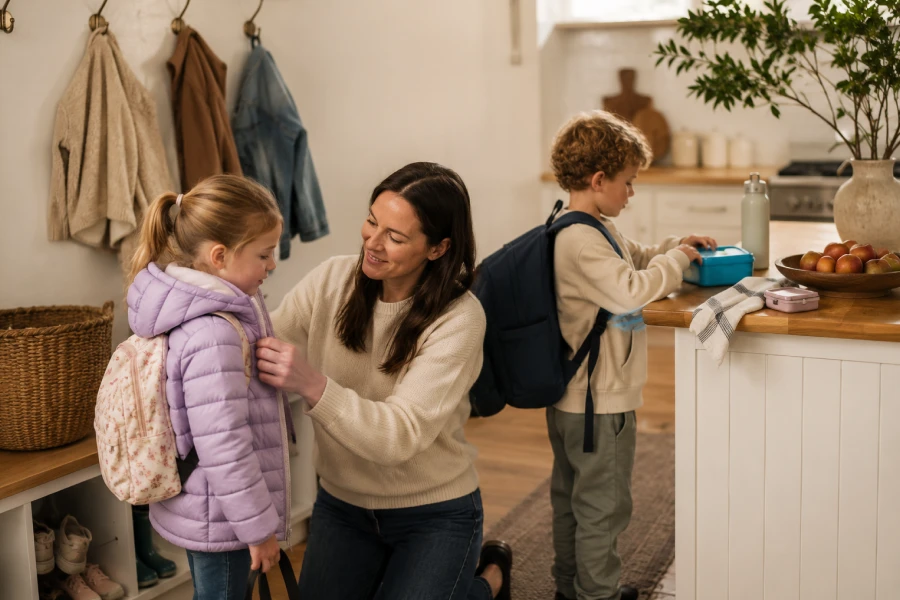
A morning routine for busy parents has to respect limited energy. Parents are not only getting children ready. They are managing work, meals, pets, messages, laundry, and emotional needs. A complicated plan usually fails because it demands too much attention. The better answer is subtraction. Remove extra choices. Move supplies closer to where they are used. Prepare predictable items before the morning begins. Children follow simpler systems more easily. Adults maintain them with less resentment. The first hour improves when the plan becomes lighter.
Minimal does not mean careless. It means every step earns its place. Busy parents need routines that work during ordinary pressure. If a step requires too much setup, it will disappear. If a task creates arguments, it needs redesign. Keep only what supports leaving well. Place bags, shoes, and jackets near the door. Keep breakfast options limited. Use family morning rhythm ideas to reduce scattered movement. The system should make the next action obvious.
Zones make the home do more of the organizing. A dressing zone keeps clothes and socks together. A breakfast zone keeps bowls, napkins, and simple foods ready. A launch zone holds bags, shoes, jackets, and forms. Parents should avoid spreading morning supplies across the house. Children lose focus during long transitions. A zone reduces steps. It also reduces shouting from room to room. The home starts guiding the routine. Order becomes easier because each area has a clear purpose.
Efficiency matters, but connection often saves the morning. A child who feels rushed may slow down. A child who feels seen often cooperates sooner. Start with one warm moment. It might be a hug, a greeting, or a gentle hand on the shoulder. Keep it brief and sincere. This connection lowers resistance. Parents should not save kindness for after compliance. Warmth belongs at the beginning. A stress-free morning usually starts with emotional safety. Then structure works better.
Multiple children need staggered expectations. They rarely move at the same speed. One child may dress quickly. Another may need extra transition time. Assign each child a clear first task. Avoid giving everyone the same instruction at once. This creates noise. Instead, move through the routine like a traffic pattern. Older children can lead one small step. Younger children can follow picture cues. Parents save energy when each child knows a personal path.
Decision fatigue makes mornings feel heavier than they should. Parents answer too many tiny questions. Children ask about clothes, food, toys, screens, and schedules. Set defaults before the day begins. Weekday breakfasts can repeat. School clothes can follow a simple rotation. Screens can stay off until departure. A getting ready routine protects everyone from unnecessary debate. Fewer choices create more cooperation. The family saves energy for the day ahead.
Sustainable routines survive imperfect days. They do not collapse when someone oversleeps. They do not require a perfectly clean house. Review the plan every few weeks. Remove steps that no longer serve the family. Add support where stress keeps appearing. Parents should measure success by recovery, not perfection. A morning that gets back on track still counts. Children learn resilience from that approach. The routine becomes dependable because it stays realistic.


Leave a comment